Address
Maroubra NSW 2035

At Blaise Building Services, we believe in improving the living conditions of every human and looking after the planet by providing a healthier environment through high performance construction. Our aim is to make healthier, more economical and sustainable homes the new norm.
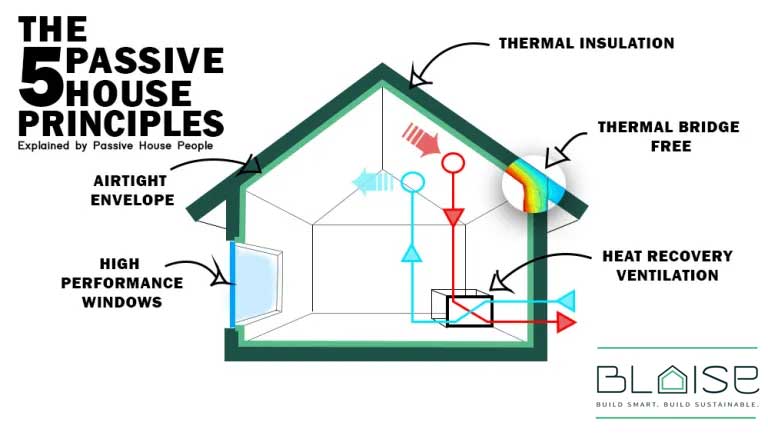
First created in Germany, Passivhaus is considered one of the most rigorous voluntary, energy and health-based standards in the world's design and construction industry today. Its high-performance building standards are science-based and proven internationally, and allow buildings to consume as much as 90% less heating and cooling energy compared to conventional buildings in Australia and all over the world.
The Passive House (Passivhaus) principles are performance based and can be applied to any building type or design. Although Passive House certification is best suited to new constructions, its principles can be applied in renovation projects and a retrofit can be done to reach greater energy performances and a more comfortable space.
Any building type can be certified as a Passive House project. Passive House is not limited to residential buildings.
In a certified Passive House building, energy used for heating and cooling is reduced, indoor temperatures are always comfortable (usually between 20–25 degrees without heating or cooling), external noises stay outside, and there is a continuous supply of filtered, clean air.
This means that when it's hot or cold outside, when the neighbours are being noisy, or when back-burnings have brought a cloud of smoke in your street, all you have to do is close the windows and your home will quickly become quiet, comfortable, and filled with fresh indoor air supplied via a mechanical ventilation system with Heat Recovery technologies.
Thermal comfort is reached and heating and cooling loads are minimised using improved insulation, high-quality double to triple-glazed windows, optimal use of passive solar energy and thermal mass, external shading, and limiting unwanted heat loss or gain by addressing thermal bridges. All those elements are taken into account at design stage where our Passive House designer and consultants enter the information into the Passive House Planning Package (PHPP) — a software tool that is essential for designing any Passive House building and is also a key tool in designing and building high-performance homes.
"If you would like to find out more about Passive House, get in contact with us."
— Stephane Blaise, Certified Passivhaus Designer & Tradesperson
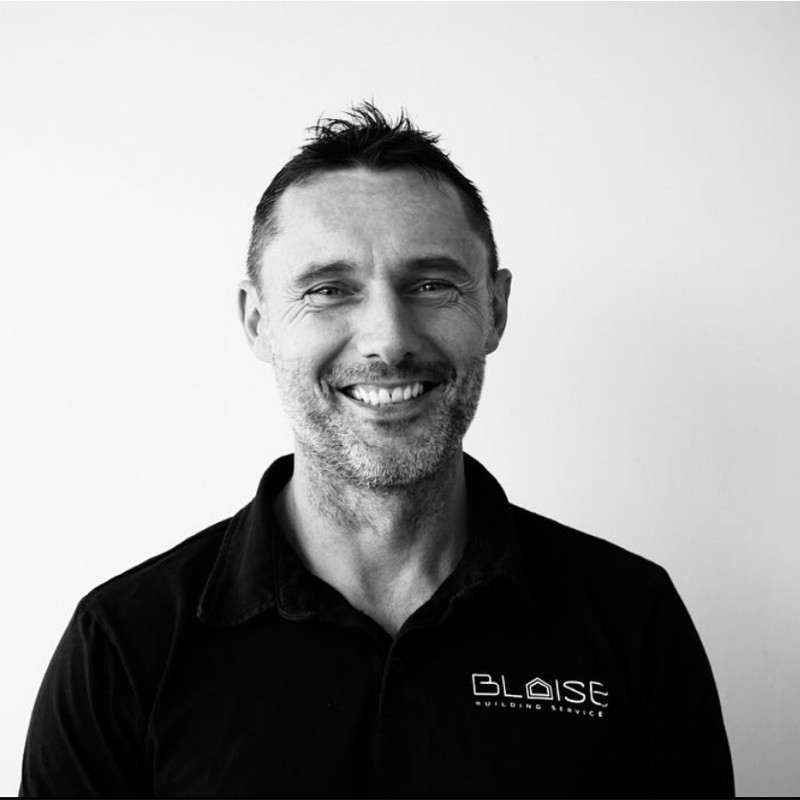
Stephane Blaise
Director, Blaise Building Services
Class 2 Practitioner Builder — a higher tier of licensing than a standard Licensed Builder. Certified Passive House Tradesperson and Certified Passivhaus Designer (Passivhaus Institut, Germany). Member, Master Builders Association NSW and Australian Passive House Association.